ArtiQ: An Artist-in-the-Loop Chatbot for Question Answering in Art Galleries
Jinyu Liu, Effie Lai-Chong Law and Hubert P. H. Shum
Proceedings of the 2026 Nordic Conference on Human-Computer Interaction (NordiCHI), 2026
Abstract
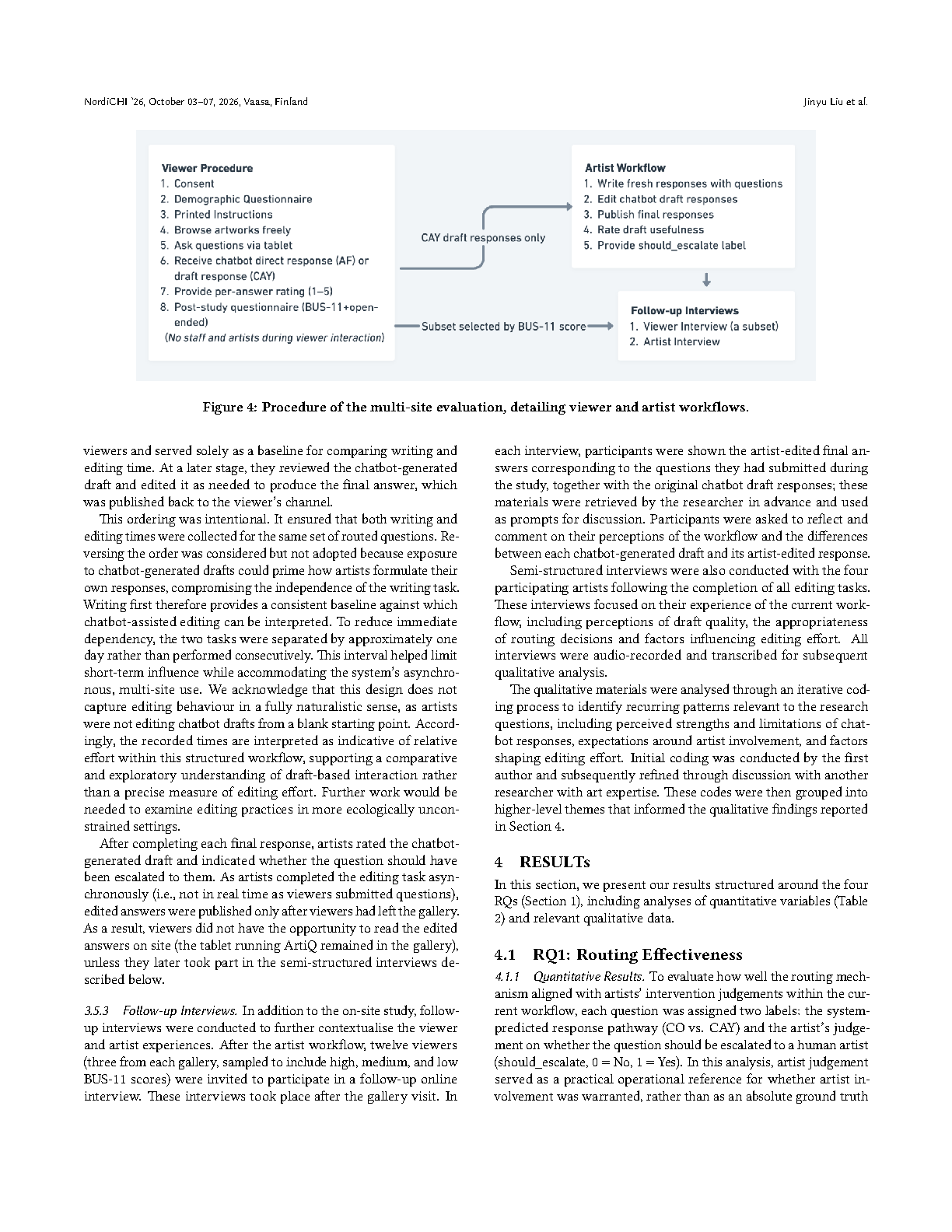
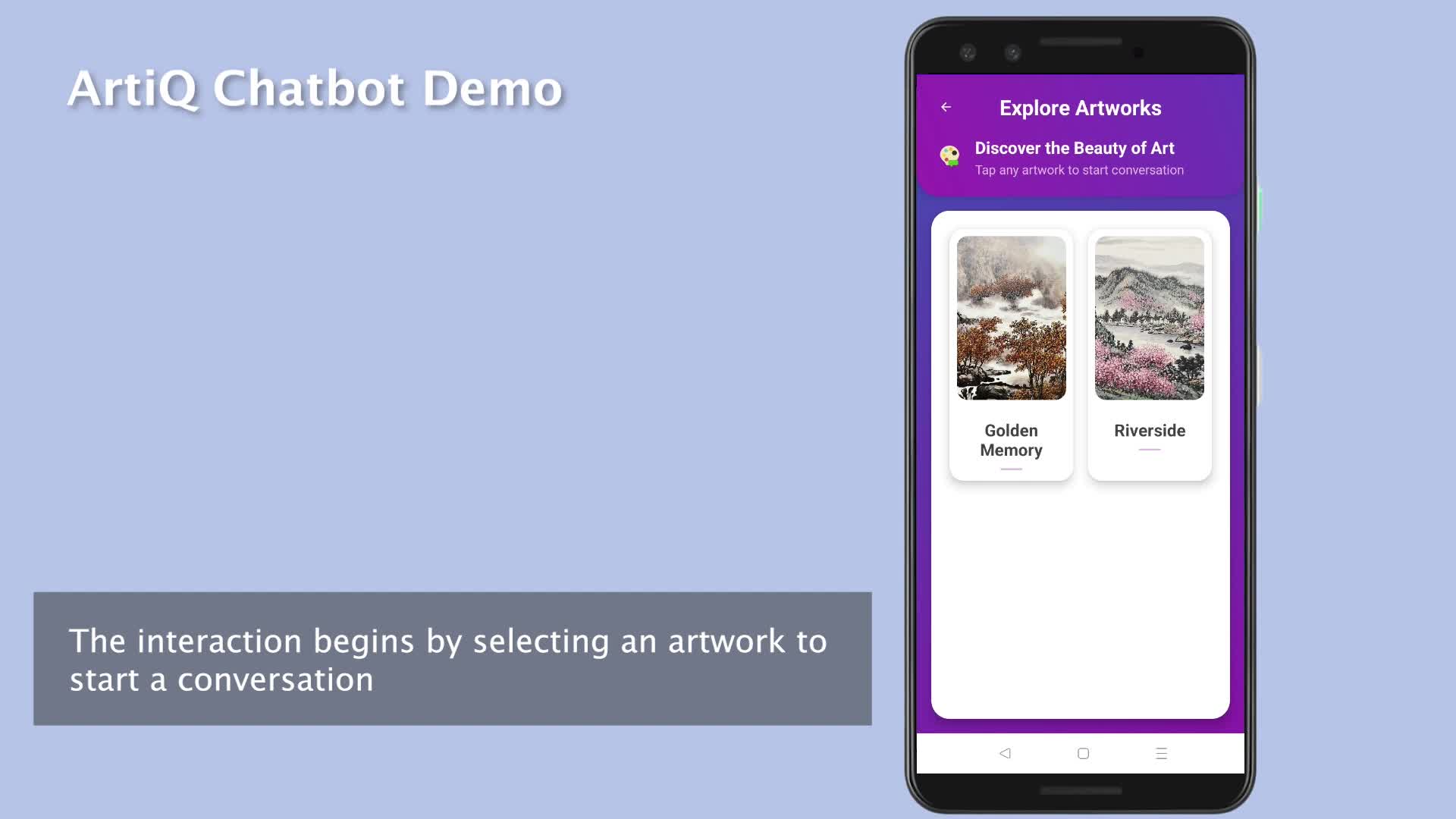
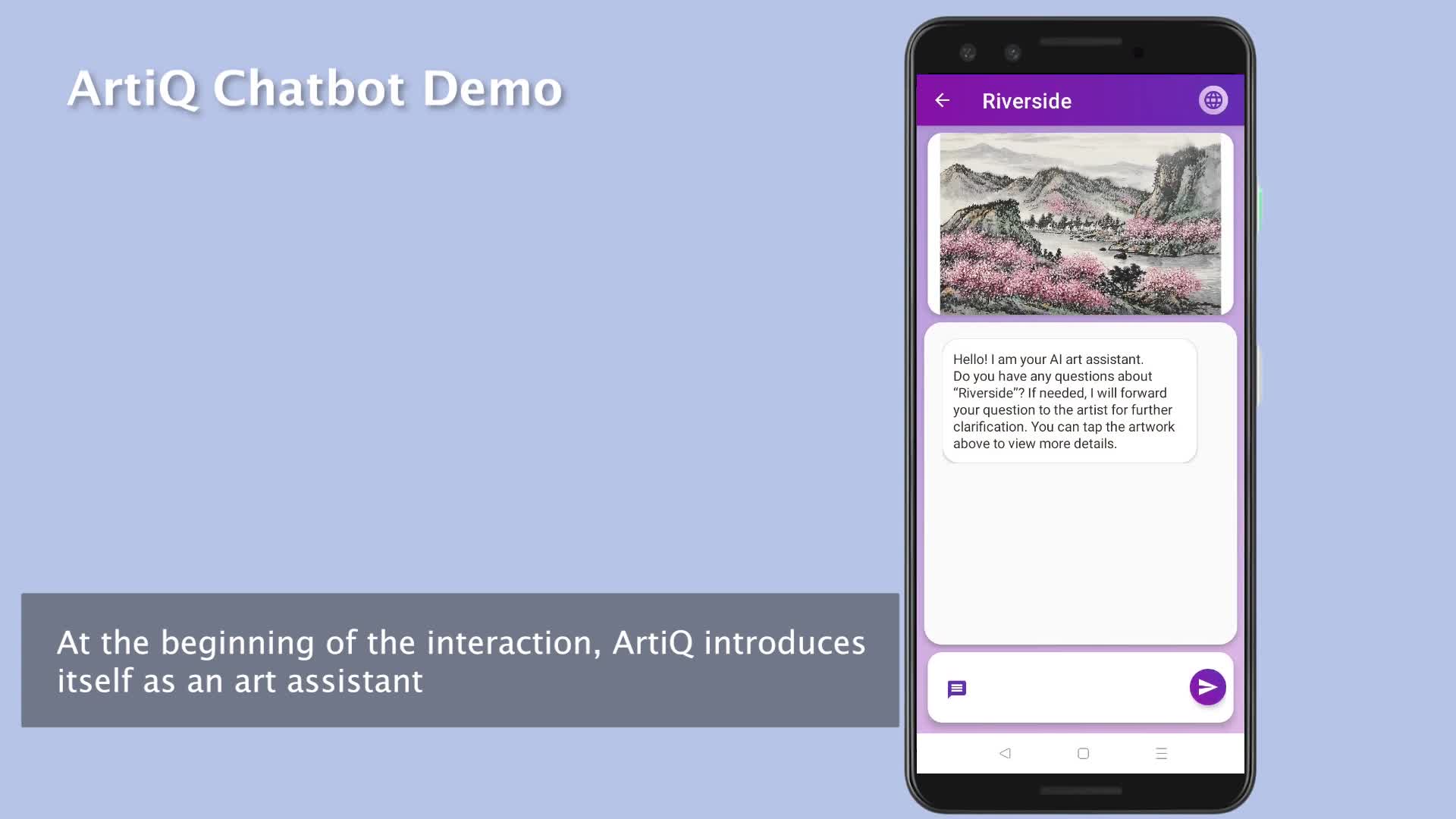
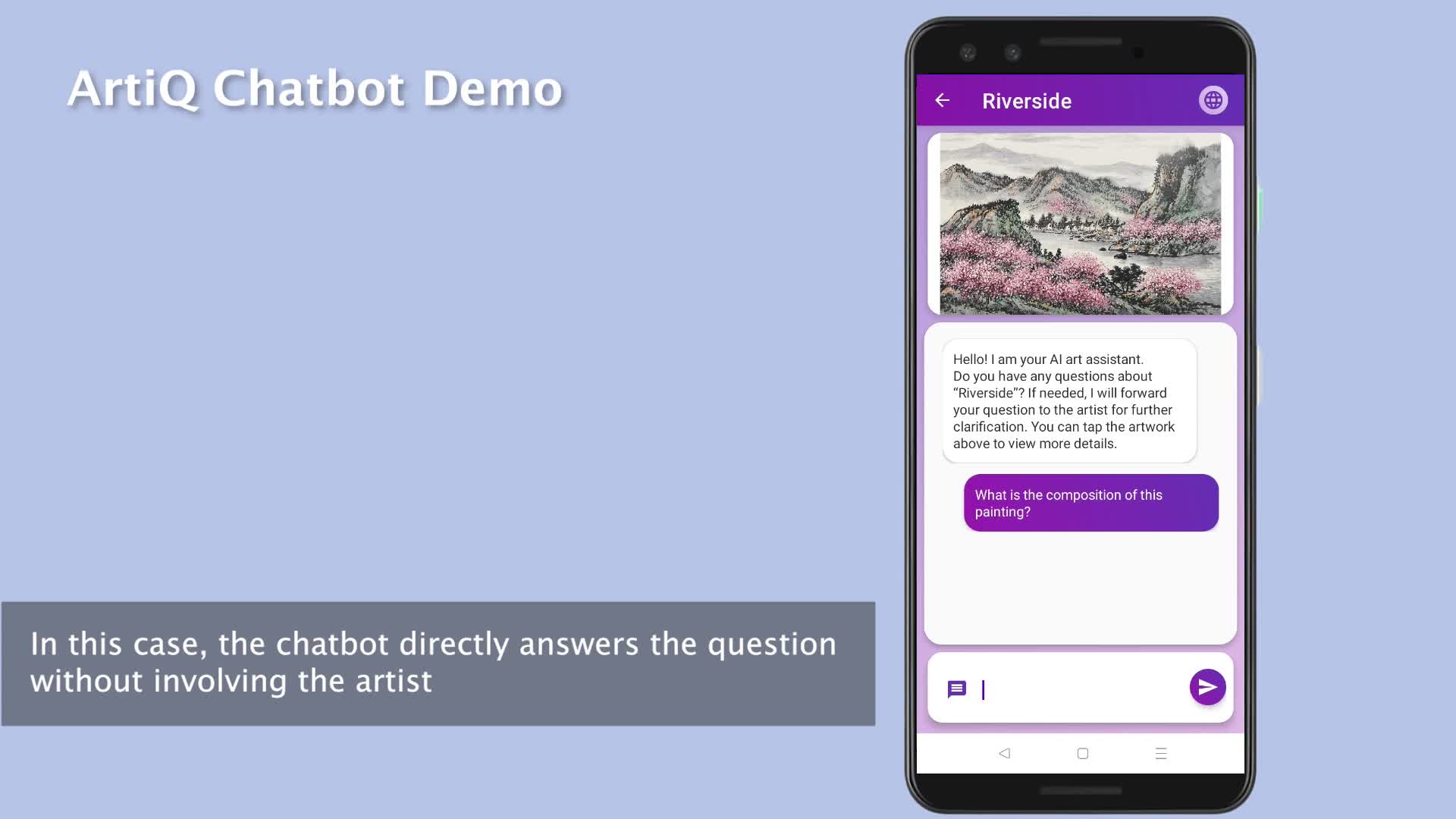
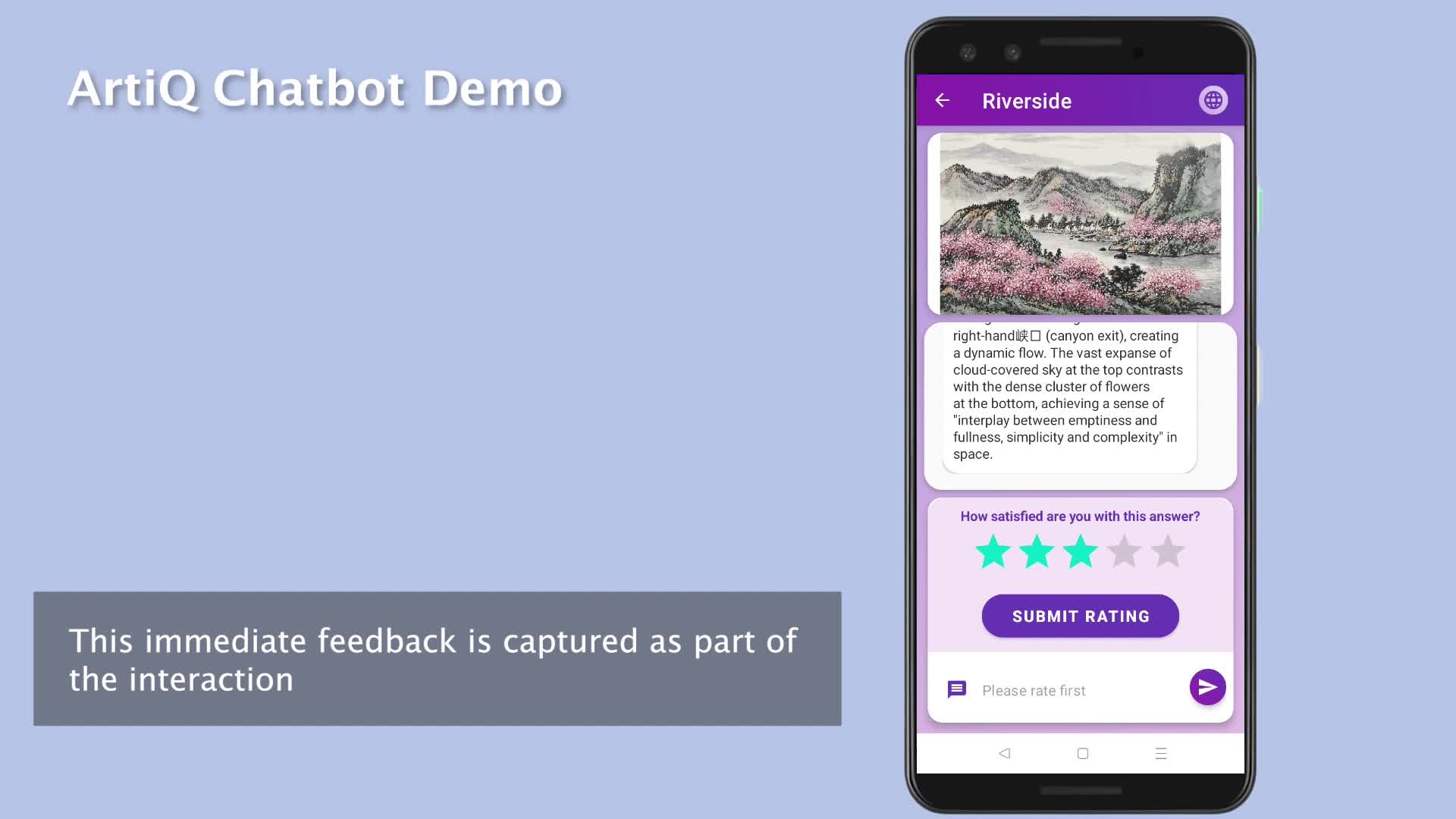
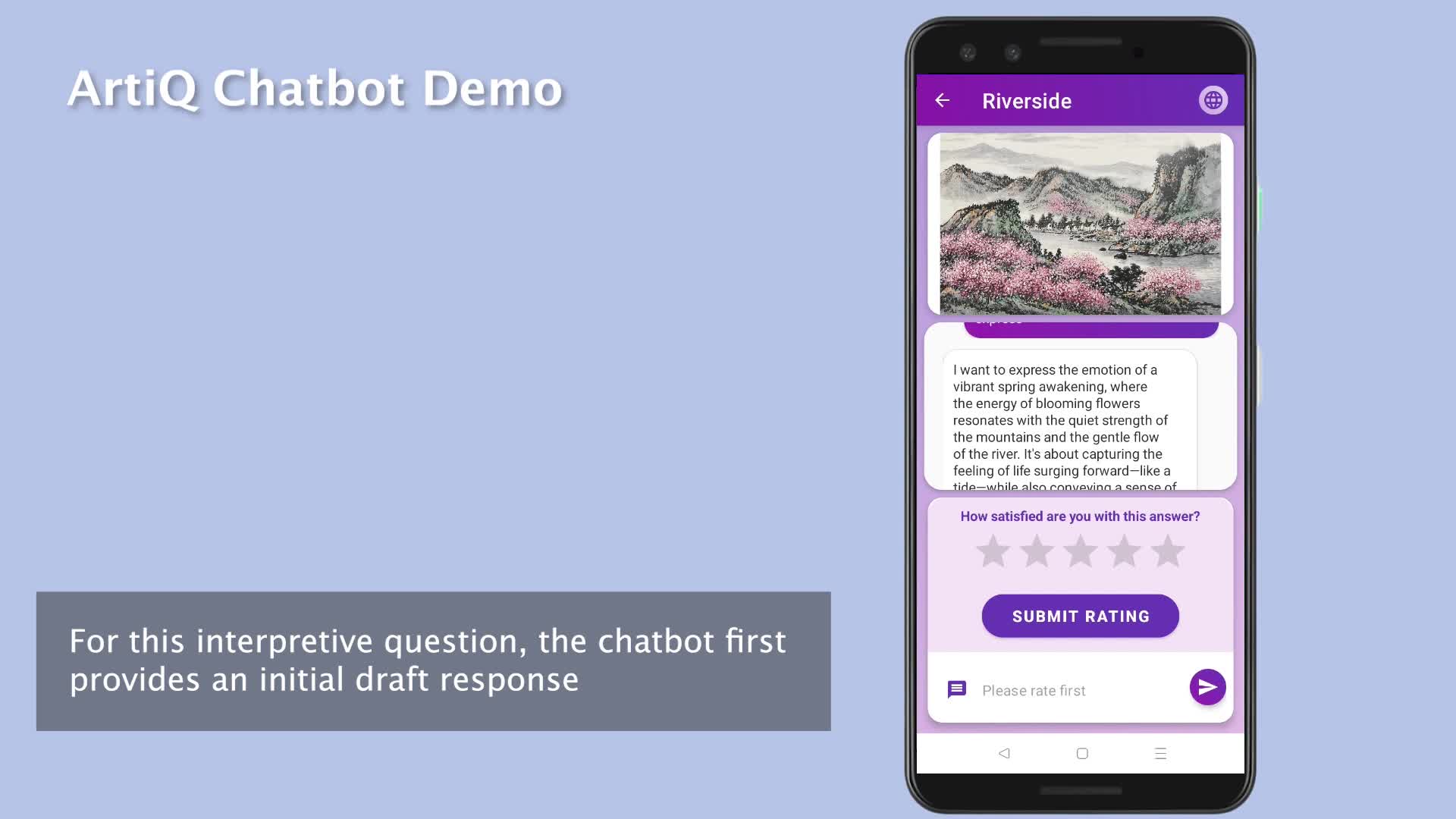
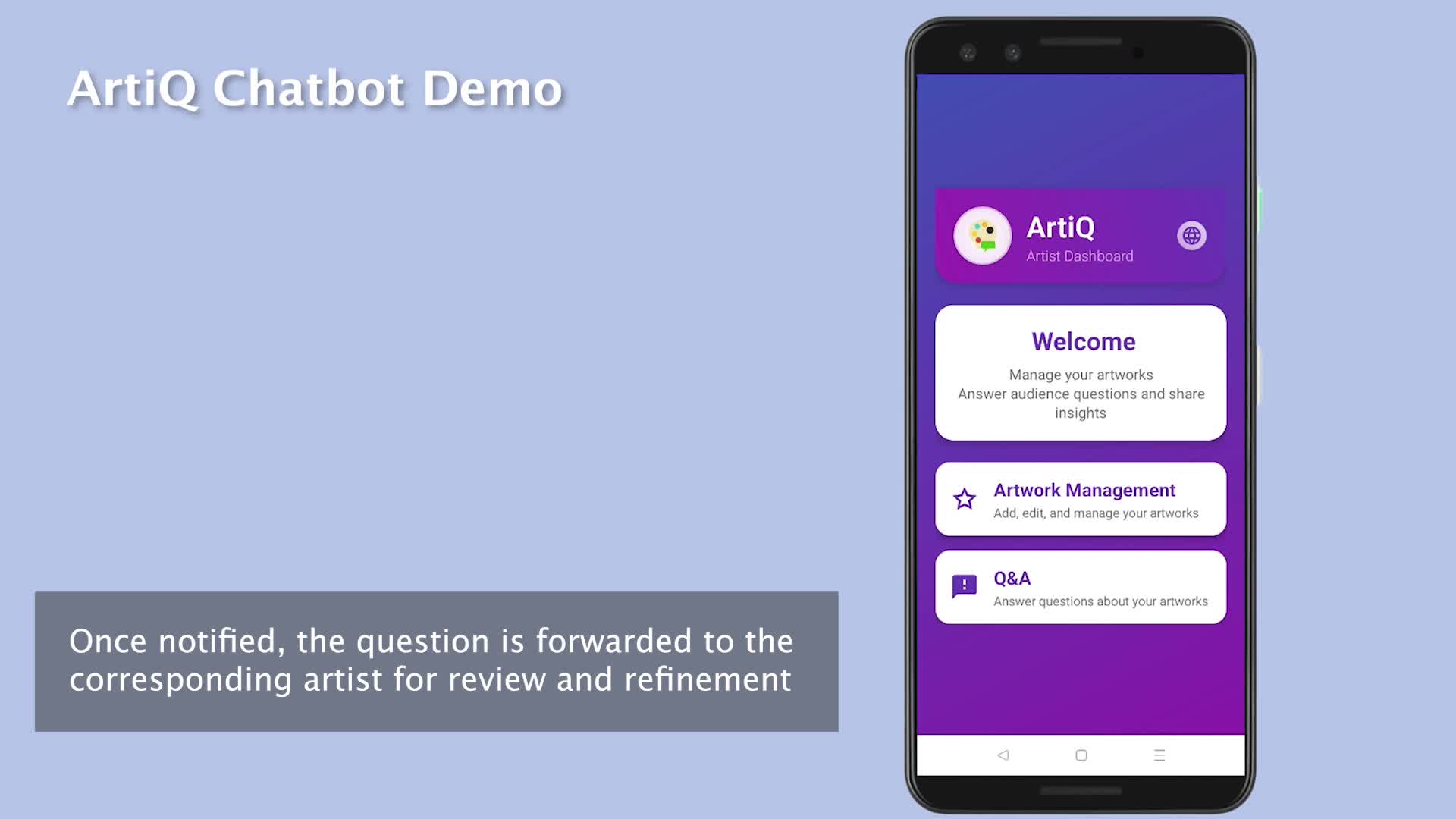
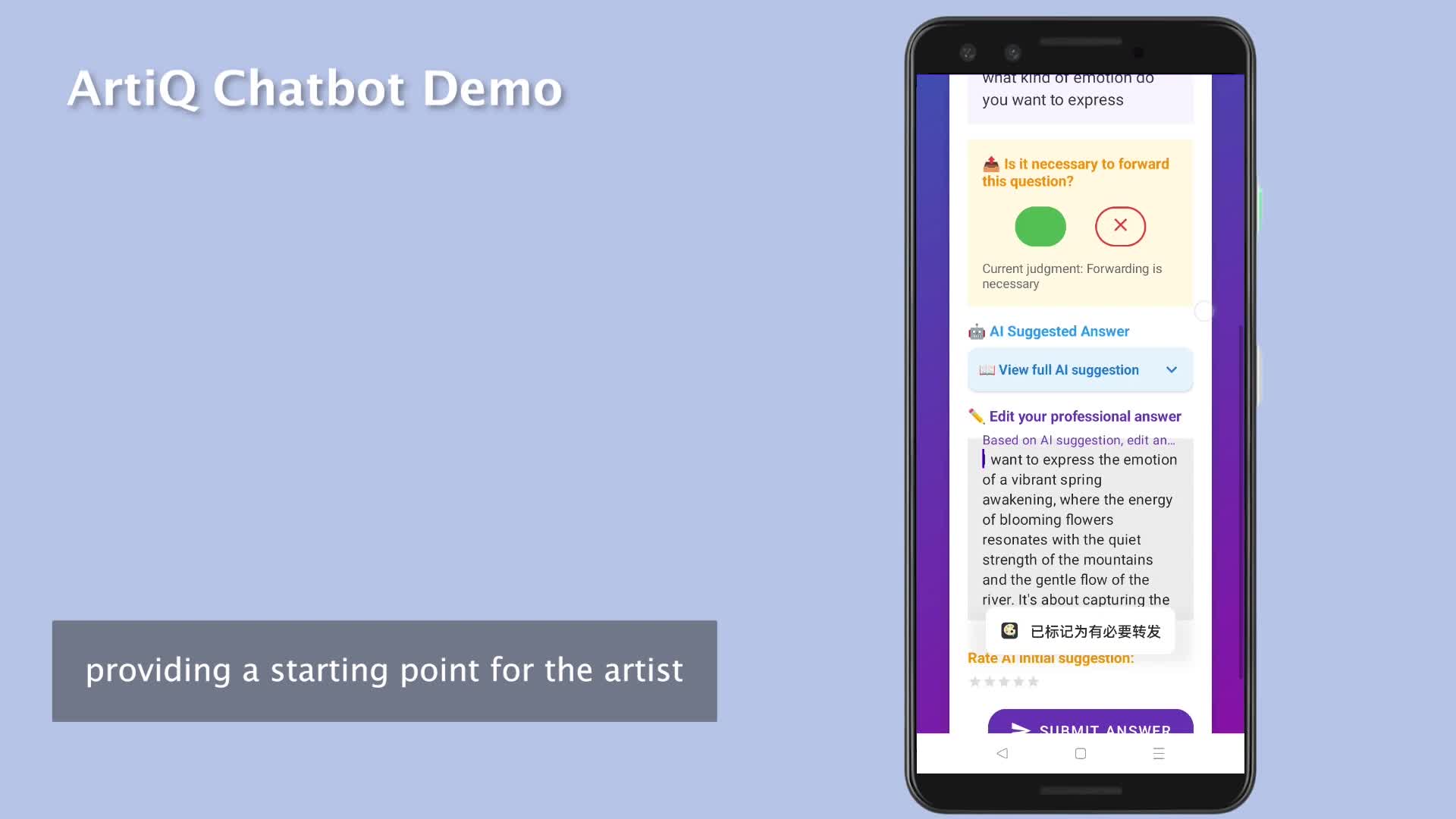
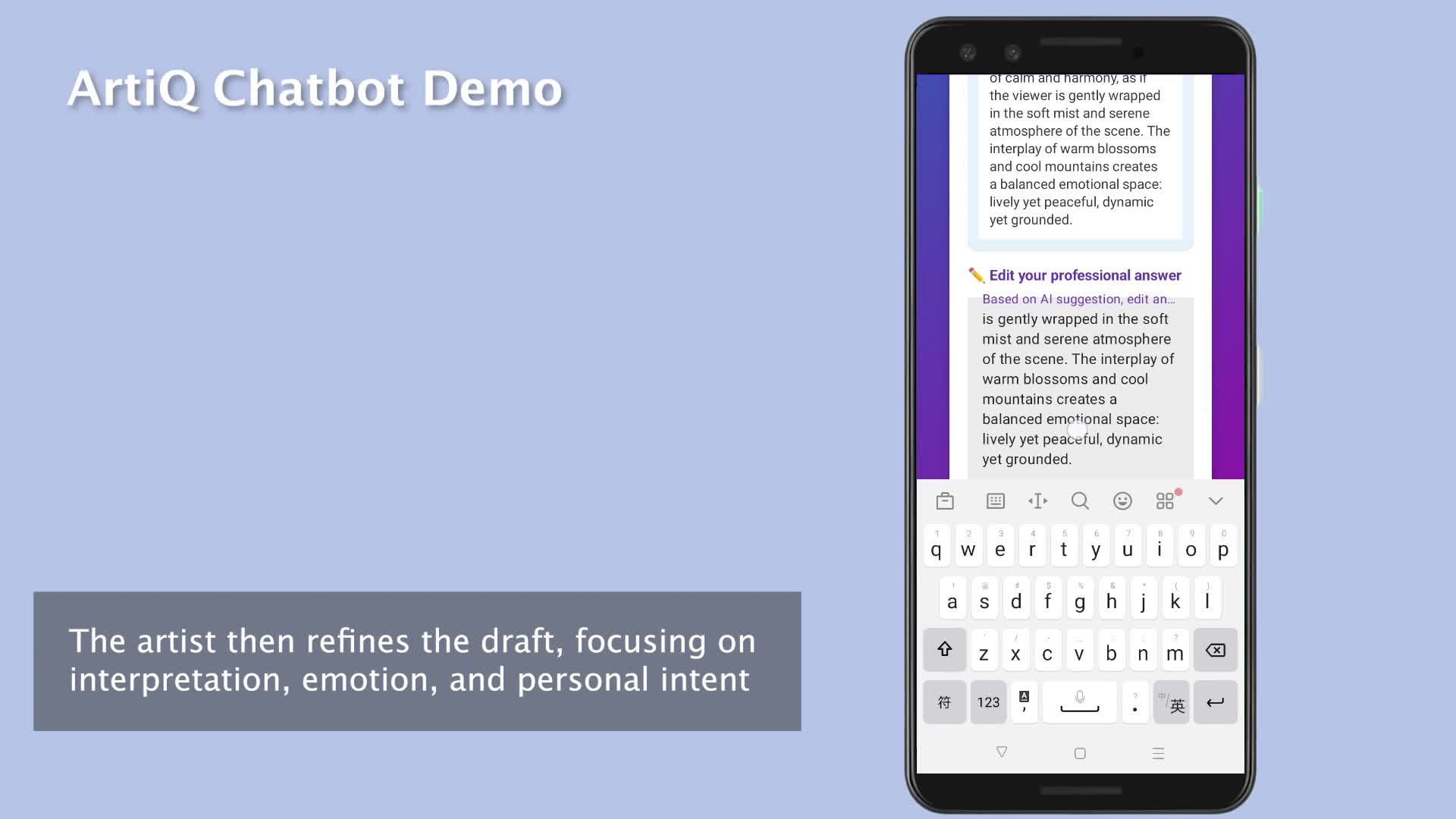
The growing use of chatbots in art galleries raises design challenges in responding to the diverse questions that viewers pose about artworks. This study investigates how artist-in-the-loop workflows can be designed to address these challenges by structuring collaboration between chatbots and artists in responding to viewers’ questions about artworks. We implemented this approach in ArtiQ, an art chatbot designed to operationalise the proposed artist-in-the-loop workflows by routing questions and enabling artists to refine chatbot responses, thereby allowing empirical examination in real-life gallery settings. We evaluated ArtiQ through a multi-site field deployment across four art galleries, involving 4 artists and 51 viewers. Adopting a mixed-methods approach, we integrated interaction logs of 420 viewer questions, viewer questionnaires (per-answer helpfulness ratings and the BUS-11 usability scale), and semi-structured interviews with artists and a subset of viewers. Quantitative analyses examined routing performance, viewers’ ratings of chatbot responses across the two pathways, and the effort involved in artist editing, while qualitative analyses characterised how viewers and artists experienced the workflow. Results from the deployment demonstrate that artist-in-the-loop workflows can help maintain the quality of chatbot responses for viewer questions by retaining human interpretive control through selective artist involvement when interpretive expertise is warranted. These findings offer design implications for artist-in-the-loop systems, informing how LLM-powered chatbots can be integrated into cultural settings while preserving human authorship and interpretive integrity.
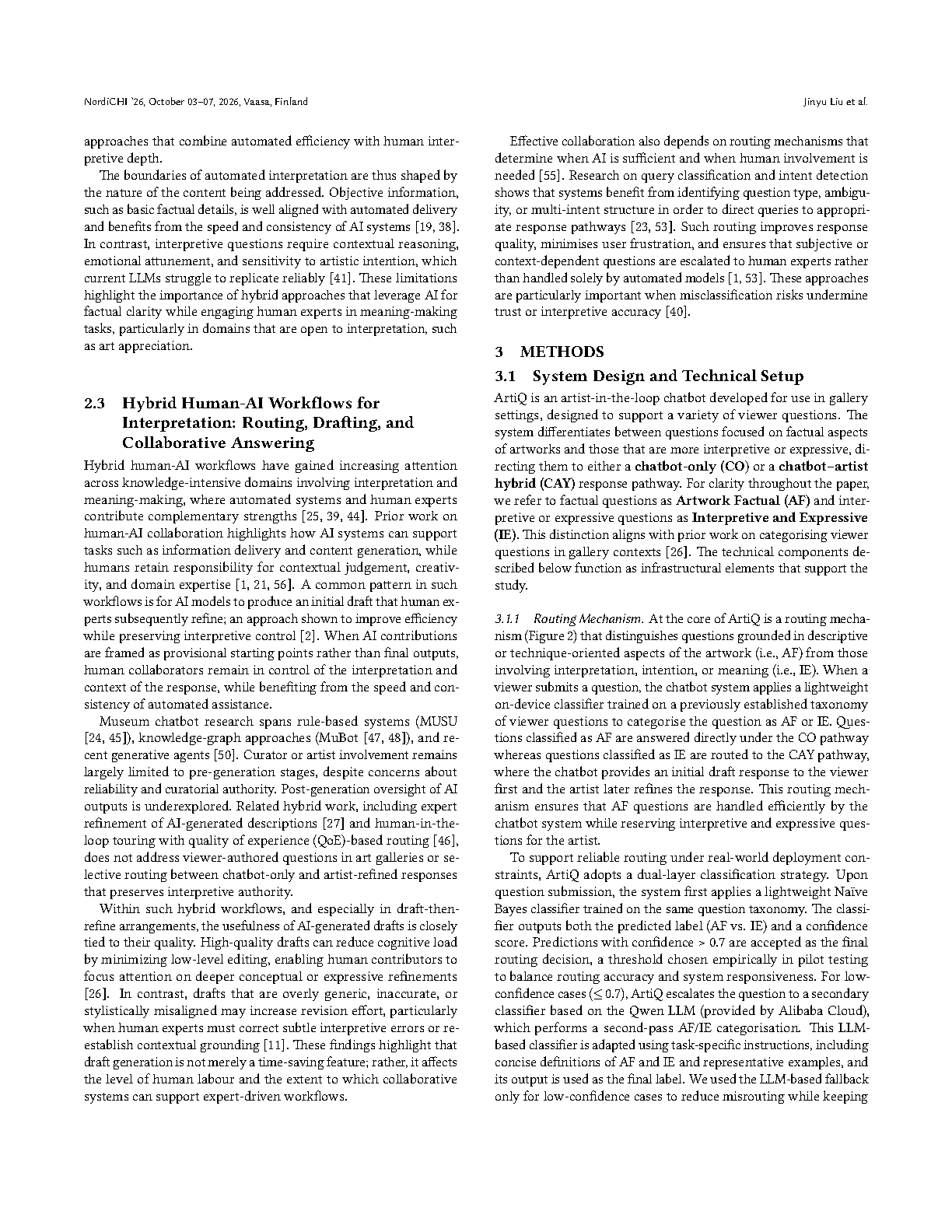
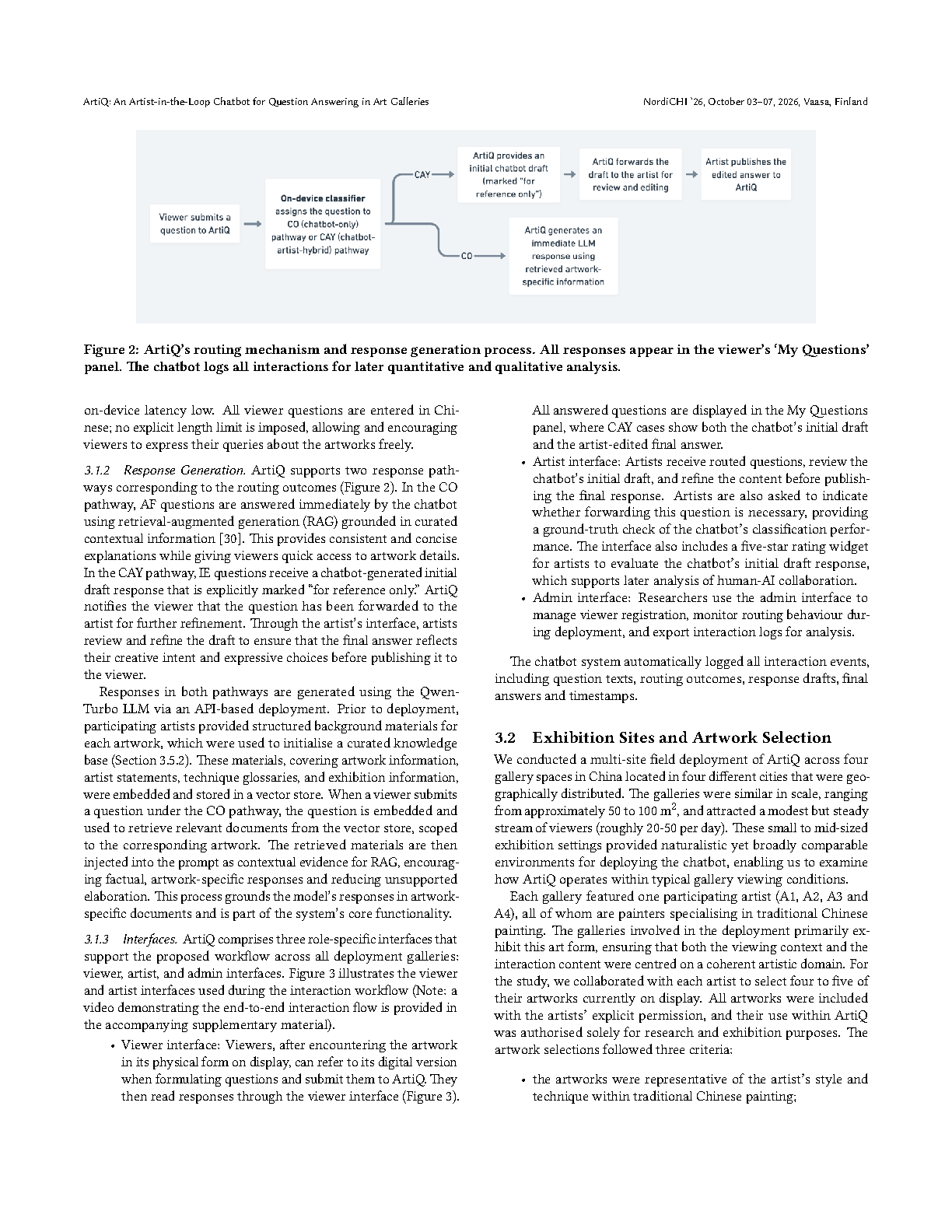
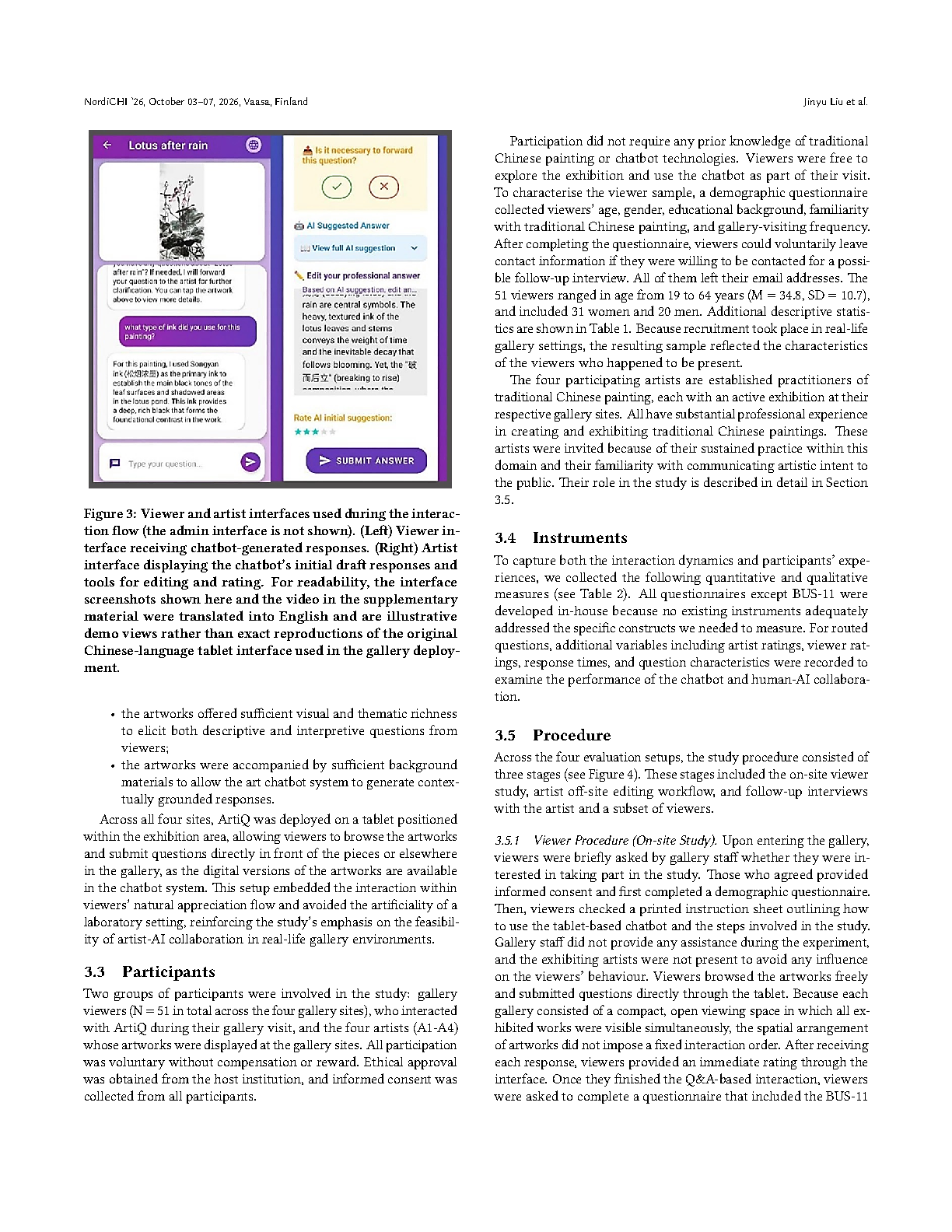
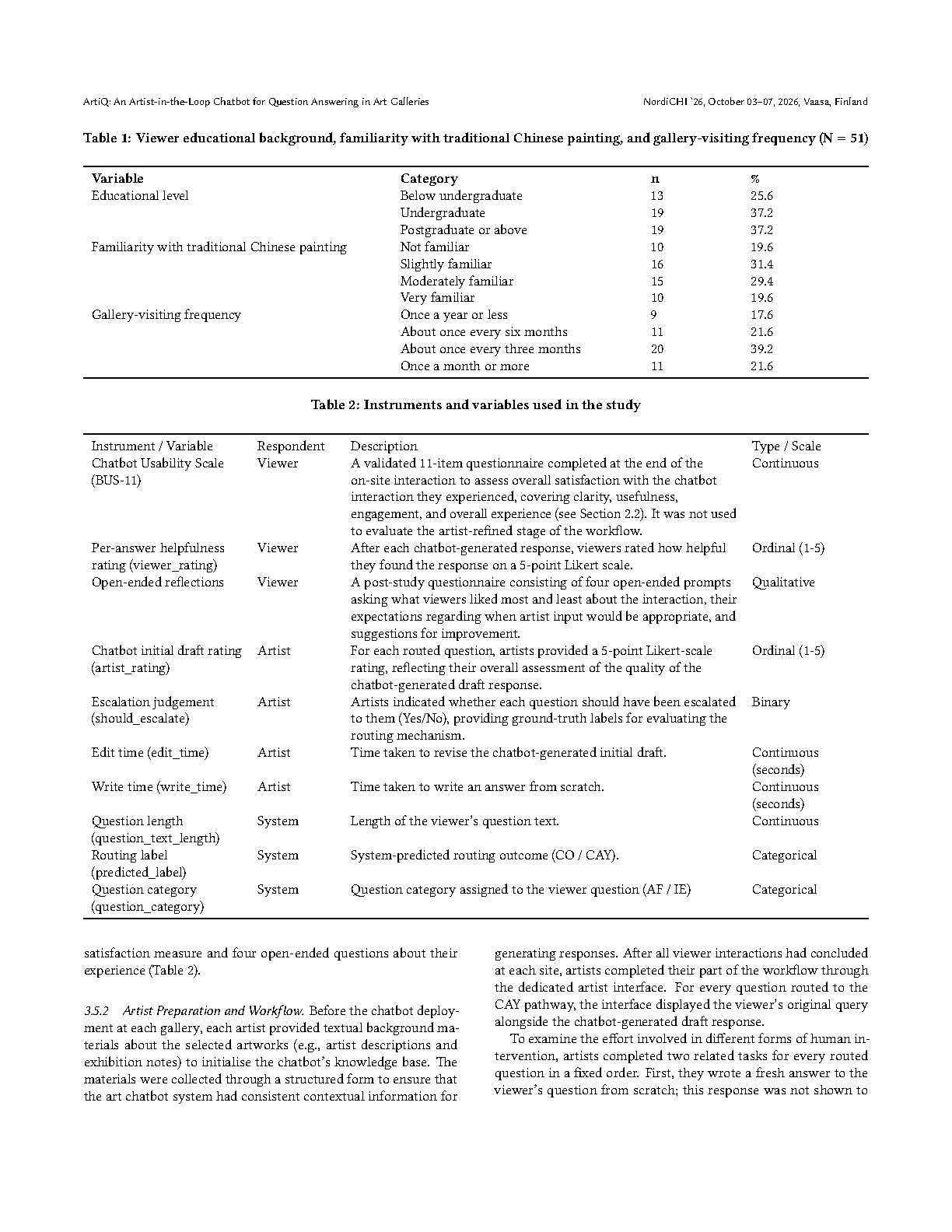

YouTube
Related Research

